Skip to content

Instant delivery to your inbox

ES

ImprovisationeBook

15 Easy Exercises to Start Improvising (with audio, no music theory needed)

Start improvising today, on any instrument, with 15 step-by-step exercises and audio examples. No theory background needed.
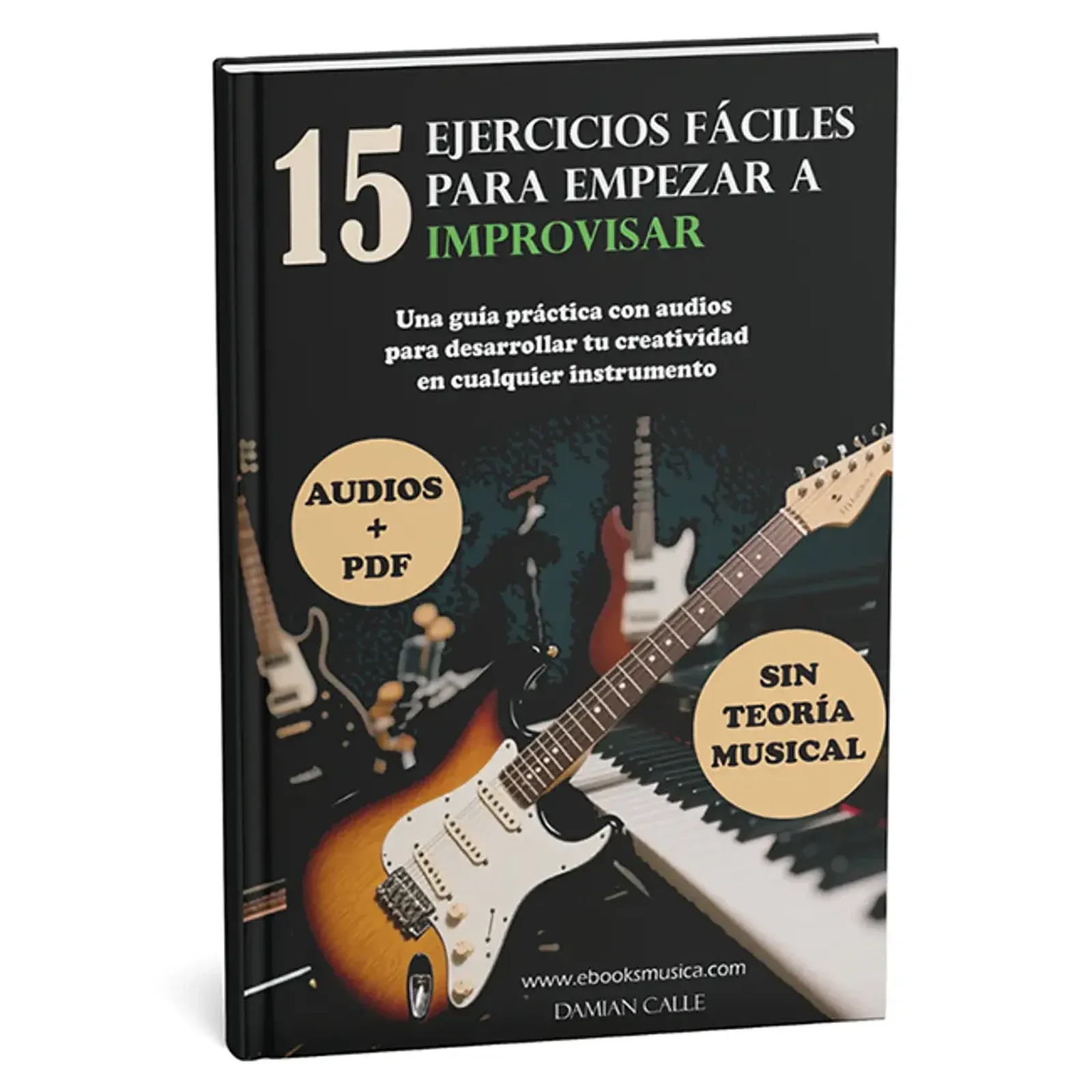
  • 15 Easy Exercises to Start Improvising (with audio, no music theory needed): cover
$17
Buy now

§ 01The problem

Sound familiar?

  • Someone puts on a backing track and you have no idea where to start.
  • You keep playing the same patterns and sound the same on every song.
  • You think you need to know a ton of theory to improvise.

A hands-on resource to develop your musical creativity, no theory required. The exercises use the minor pentatonic scale over a 12-bar blues as a starting point, and the ideas carry over to many genres.

§ 02Results

What you'll be able to do

  1. 01Feel confident improvising over a backing track from the very first exercise.
  2. 02Create your own motifs and phrases instead of repeating patterns.
  3. 03Play the minor pentatonic scale over a 12-bar blues with confidence.
  4. 04Take what you practice into other styles, from rock and blues to jazz, pop, funk and Latin music.

§ 03Contents

What's included

  • 15 step-by-step exercises

    Each one adds a new idea on top of the last.

  • Audio examples

    Hear how every exercise sounds and practice along with it.

  • The author's own methods

    The improvisation and songwriting methods Damián uses himself.

  • Multiple styles

    Works for rock, blues, jazz, pop, funk and Latin music.

§ 04Chapters

Contents

See the full table of contents
  1. 1.Introduction: the A minor pentatonic scale over a 12-bar blues
  2. 2.Motif and musical phrase: the two core concepts
  3. 3.Rhythmic variations: augmentation and diminution, syncopation, anticipation and delay, changing the subdivision (hemiola)
  4. 4.Melodic variations: melodic sequences, intervallic expansion and compression, melodic inversion, ornamentation
  5. 5.Exercises 1 to 11: each technique on its own and combined, with 12 bars for you to practice after every example
  6. 6.Exercise 12: all the variations together
  7. 7.Exercises 13 to 15: building complete phrases with the ABABCD, AAABCB and ABACDE forms

§ 05Before you buy

Who it's for

  • Beginners who have never improvised.
  • Musicians who feel stuck when it comes to creating.
  • Any melodic instrument: guitar, piano, bass, horns, voice.

Who it's not for

  • Players who already improvise fluently and want advanced harmony (that's what Learn Harmony Through Classic Rock is for).

§ 06Who wrote it

About the author

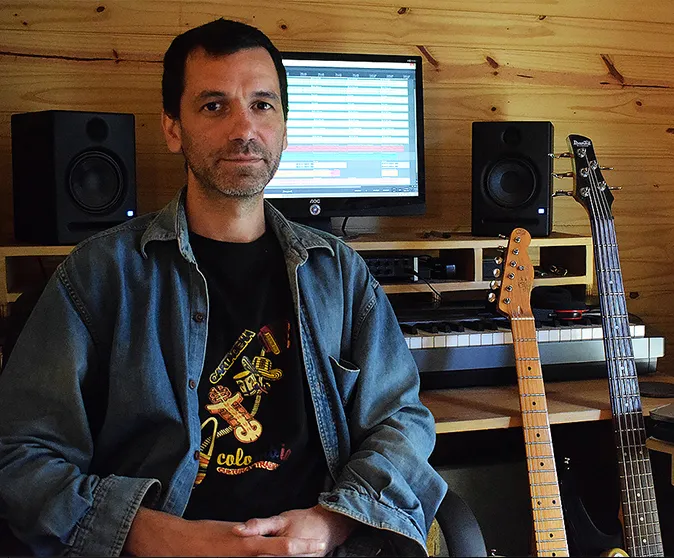
Damián Calle in his studio with his guitars and keyboard
Damián Calle

I'm a multi-instrumentalist, composer, producer and mixing engineer. I produce artists and compose music for film and animation. I translated the harmony treatises of Jean-Philippe Rameau into Spanish, one of the founding works of modern music theory. I was a guest professor at Sorbonne Université (2022) and at the Universidad Nacional de San Martín in Argentina (2018).

— Damián Calle

  • 20+ yearsas a musician, composer and producer
  • FilmUS credits: Once Upon A Dream (2025) and Ameka and Her Magical Crown (2024)
  • SorbonneGuest professor at Sorbonne Université (2022) and UNSAM (2018)
  • RameauSpanish translator of Rameau's treatises on harmony
Read the full story

§ 07Save

Get it in a bundle and save

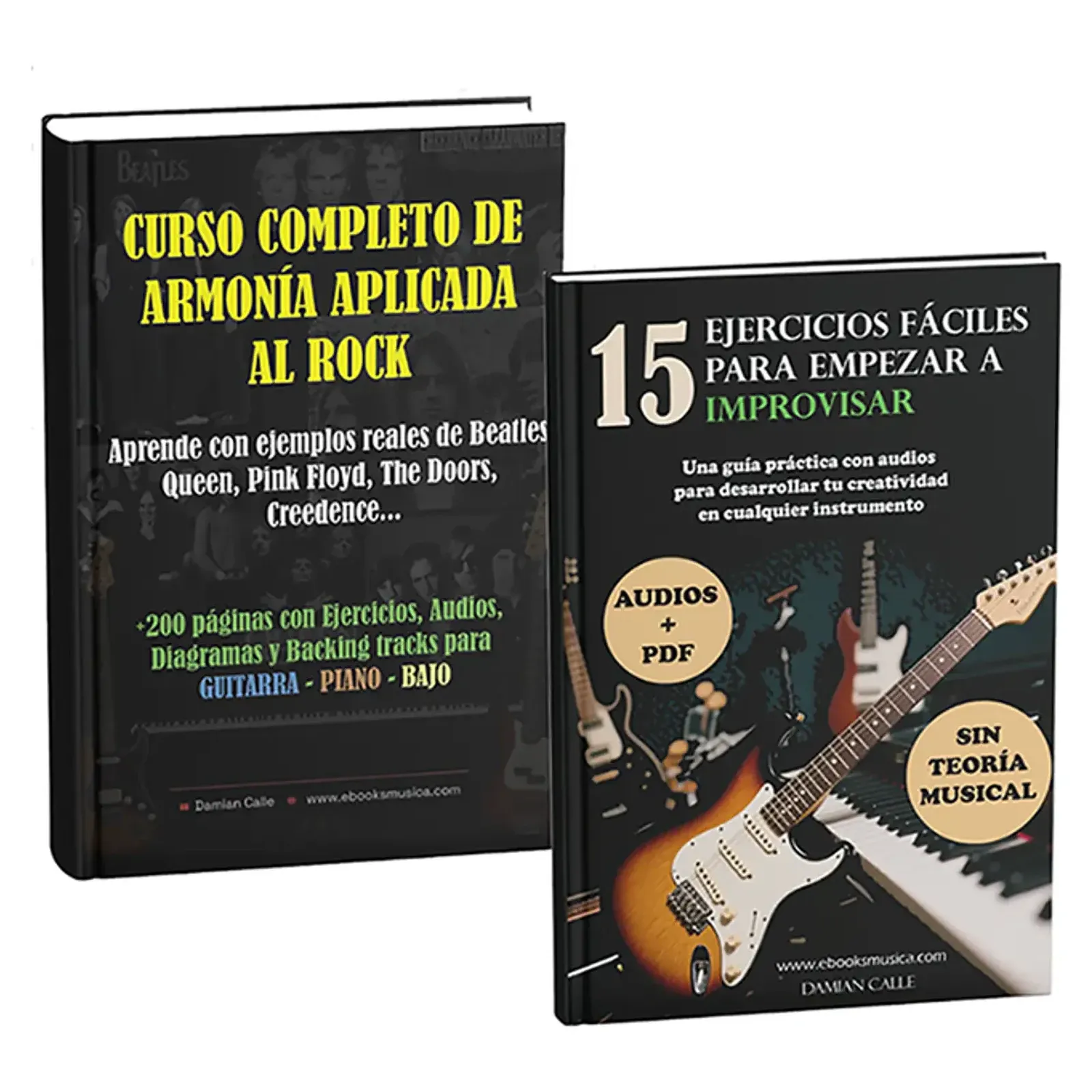
Get this book together with its companion and save compared to buying them separately.

30-day money-back guarantee

If the material isn't what you expected, email us within 30 days of your purchase and we'll refund 100% of your money. No awkward questions.

How the guarantee works

§ 08Questions

Questions about this book

Do I need to know theory?
No. The exercises are designed for you to start with no prior theory knowledge.
Will it work for my instrument?
Yes. The exercises are based on the minor pentatonic scale and work on any melodic instrument.
What style of music does it use?
The backing is a 12-bar blues, but what you learn carries over to rock, jazz, pop, funk and Latin music.

EndStart today

15 Easy Exercises to Start Improvising

Start improvising today, on any instrument, with 15 step-by-step exercises and audio examples. No theory background needed.

$17
Buy now

Your cart

Step 1 of 2

What do you play?

You can pick more than one.