Skip to content

Instant delivery to your inbox

ES

Beginner · Intermediate · Advanced

Bass

A clear path in three levels: you start by holding down songs with a band, then you create your own lines, and finally you understand why they work.

§ 01The system

Your path on the bass, in three levels

First you learn to play. Then you move freely around the whole instrument. And finally you understand why music sounds the way it does. Start where you are today: each level gets you ready for the next.

  1. 1BeginnerBass: First StepsHold down a song with a band.
  2. 2IntermediateBass: Master the FretboardYou stop just following the root and start creating lines that make the song come alive.
  3. 3AdvancedLearn Harmony Through Classic RockYou stop copying and start understanding, creating and reshaping music.

§ 02The levels

Choose your bass level

Level 1 · Beginner

Coming soon

Bass: First Steps

Working title

Who it’s for: You've never played bass, or you're just getting started.

  • Play with fingers and with a pick, with an even sound.
  • Play roots, fifths and octaves over any chord.
  • Lock in with the drums and build your first grooves.
  • Play complete songs over backing tracks.

What you get: Hold down a song with a band.
We’ll email you just once, when it’s available.

Level 2 · Intermediate

Coming soon

Bass: Master the Fretboard

Working title

Who it’s for: You already play roots and want to build your own lines.

  • Find any note on the fretboard.
  • Play arpeggios for every chord type in several positions.
  • Use passing tones and approach notes to connect chords.
  • Build your own bass lines for different styles.

What you get: You stop just following the root and start creating lines that make the song come alive.

We’ll email you just once, when it’s available.

Level 3 · Advanced

Available

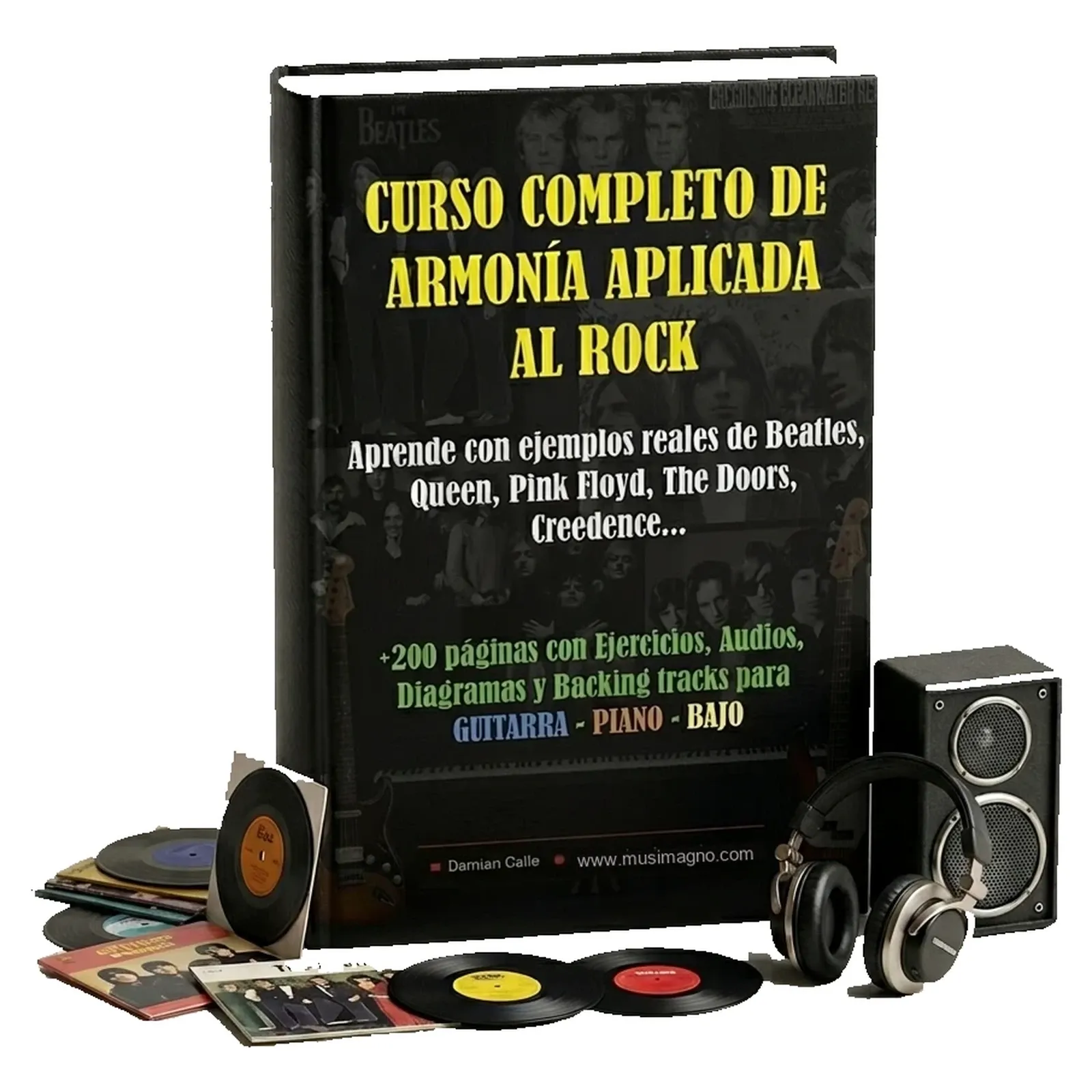
Learn Harmony Through Classic Rock

Who it’s for: You already get around the bass fretboard and want to understand why songs work.

  • Understand the function of every chord: tension, rest and resolution.
  • Analyze the harmony of any song you hear.
  • Use secondary dominants, tritone substitutions and modal interchange.
  • Know which scale to use over each chord when you improvise.
  • Reharmonize and write songs with a professional ear.

What you get: You stop copying and start understanding, creating and reshaping music.

Format: 200+ pages explained with real songs by The Beatles, Queen, Pink Floyd, Led Zeppelin and more, with backing tracks and worked-out exercises.

How it differs from Level 2: Level 2 shows you WHERE everything is on the bass fretboard and how to play it; this one explains WHY it works. If you've already done Level 2, the first chapters work as a review with real songs; the new material starts with harmonic function, dominants and modal interchange.

$37
View

§ 03Quick quiz

What's my level?

Answer three questions and we'll tell you where to start.

  1. Question 1 of 3

    Can you play a complete song with chords?

§ 04From the blog

Bass and theory articles

Music theory

Music Theory for Beginners: Where to Start

The four ideas that organize everything else: notes, intervals, scales, and chords. A clear map so you don't get lost.

Read article →

EndYour next step

Start where you are today

Each level gets you ready for the next. And once you've finished all three, Advanced has improvisation, classical theory, and more.

Other instruments:GuitarPiano

Your cart

Step 1 of 2

What do you play?

You can pick more than one.